
THE BACKLINE : ASHTHRONE BOOKING
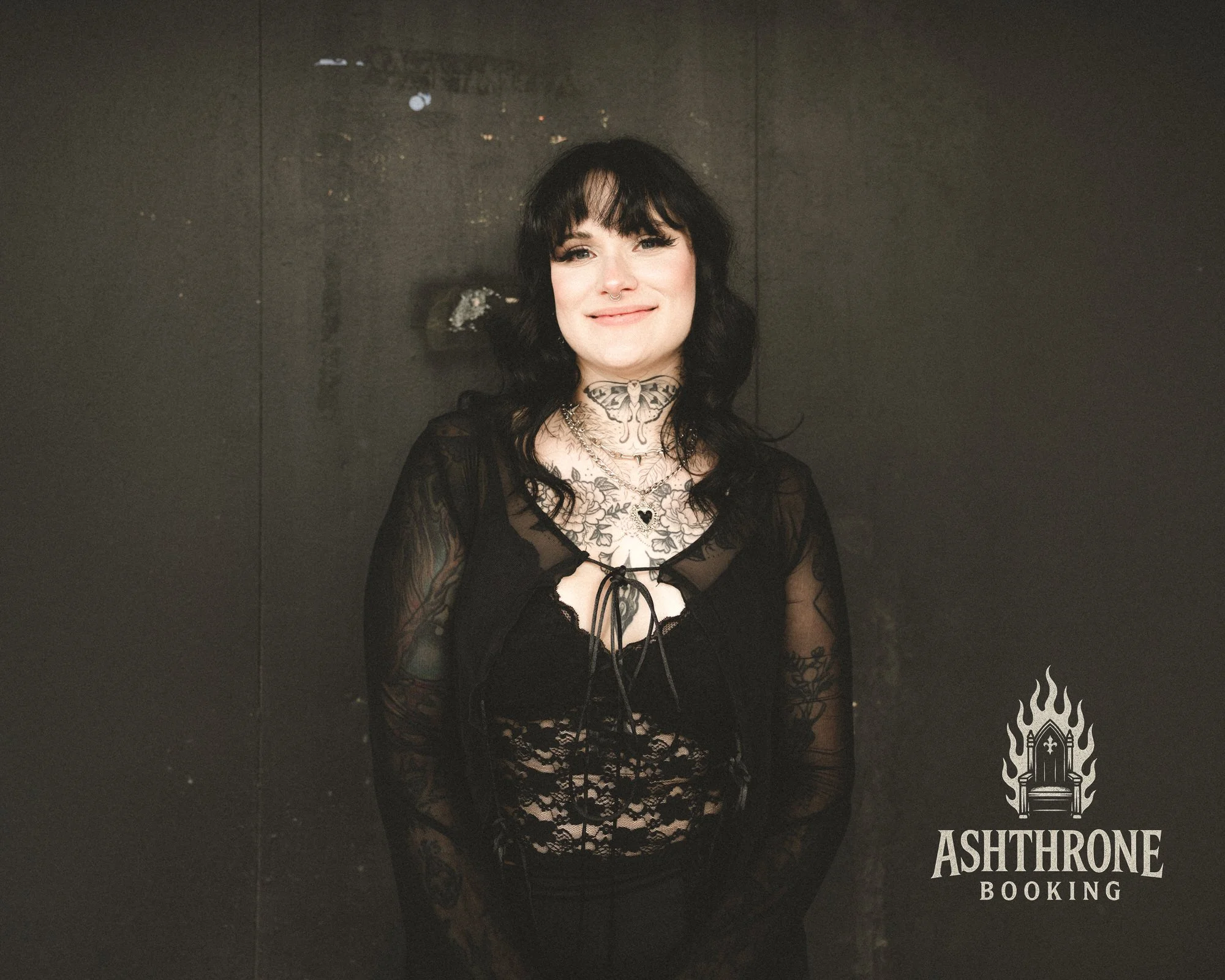
© Ellen Arden
Words and Photos by Ellen Arden
Atlanta’s independent music scene runs on far more than the bands audiences see standing on the stages before them. Behind nearly every local show is a network of promoters, photographers, venues, bookers, artists, and volunteers trying to hold together a scene that has become increasingly difficult to sustain financially over the last several years. While live music as an industry continues generating billions of dollars globally, smaller touring artists and independent venues are often operating on razor-thin margins, balancing rising costs against audiences that are now forced to pick and choose carefully which shows they can afford to attend. For independent booking companies like Ashthrone Booking, that reality shapes almost every part of putting together a show.
Frequency ATL recently sat down with Ana Wagner, owner and operator of Ashthrone Booking, to discuss all things business, booking, and the harsh realities most bands are facing in 2026.
Founded by Ana Wagner, Ashthrone Booking operates mostly between Athens and Atlanta, working primarily within the cities’ independent hardcore, emo, punk, and alternative scenes. Wagner originally studied marketing before realizing that traditional industry jobs were not materializing the way she had hoped. After spending years attending local shows and becoming more involved in the music community, she began helping book shows for the Atlanta/Athens band Phantom Dan before eventually deciding to launch her own company. What started as helping one band quickly turned into coordinating full lineups, managing promotions, working directly with venues, and handling the logistics that most audiences never think about when they walk into a room for a local show.
For Wagner, booking is far less glamorous than people outside the industry probably assume.
“My day and night usually involve sending a lot of emails back and forth with venues and bands,” Wagner says. “I basically live on my laptop and my phone — and I’m bad at turning work mode off. Bands will message me at like two in the morning, and if I’m awake scrolling on my phone, I’m immediately like, ‘I need to work on this right now.’”
Much of Wagner’s work happens long before doors open — constant communication with bands and venues, coordinating routing for touring bands, assembling lineups that make sense both creatively and financially, promoting events online, designing flyers, tracking which bands actively support the scene, and then trying to estimate whether audiences will actually show up. Even something as simple as securing a date for a show can often become complicated.
Wagner described numerous situations where venues placed her shows on secondary holds, double-booked events, or shifted schedules at the last minute, forcing entire lineups to be reorganized around venue availability or relocated to other venues completely. And beyond the logistics, Wagner says the emotional labor involved in booking can also become difficult to separate from everyday life.
In addition to all of the unpredictability, promoters and bookers increasingly have to think about economics in ways that extend beyond ticket sales. Wagner repeatedly returned to the financial pressures facing smaller touring bands in particular. Gas prices, lodging, equipment maintenance, food costs, and production fees have all increased significantly over the last several years, making DIY touring harder to sustain than it once was.
Money Matters
A 2025 survey from Ditto Music found that more than 82% of unsigned musicians reported that touring had become financially unaffordable, with many artists turning down opportunities altogether because of cost. Wagner sees those realities firsthand every time she works with touring bands passing through Atlanta or Athens.
“I think most bands on tour that aren’t signed and aren’t big are probably not making any money,” Wagner explained during our conversation. “They’re probably losing money every time they go on tour.”
That financial strain has also intensified conversations around venue cuts, production fees, and merch percentages. For many independent artists, merchandise has become one of the only dependable sources of income left while touring, especially in an era where streaming payouts remain extremely low. Yet an increasing number of venues are taking percentages from merch sales or requiring bands to pay additional staffing fees in order to sell their own merch. Wagner expressed frustration with those practices, particularly when smaller artists are already struggling to break even.
Ashthrone Booking approaches payouts differently than many larger operations. Wagner explained that she takes her percentage only after production fees are covered and, in some cases, she does not take a cut at all if bands are leaving with too little money. “I want to make sure the bands get paid as much as they can,” Wagner says. “If each band doesn’t get at least $100, sometimes I just won’t take a cut.” In her view, if independent artists are the ones creating the event itself, they should leave with something whenever possible. That philosophy reflects a broader mindset that seems increasingly necessary inside local scenes: community sustainability matters more than maximizing short-term profits.
Social media Metrics : The Hard Truth Behind the Numbers
That community aspect plays a major role in how Ashthrone assembles a bill. Rather than focusing exclusively on genre-specific lineups, Wagner often mixes different styles and intentionally pairs newer bands with stronger local draws in order to help emerging artists gain exposure. She keeps detailed notes on which bands promote their shows effectively, which bands actively support other local acts, and which groups create genuine energy in a room beyond their online following.
“Sometimes the opening band brings all the people,” she says. “So it’s not fair that they wouldn’t get paid equally.”
Social media metrics may now influence booking conversations across the industry, but Wagner remains cautious about treating follower counts as proof of real-world support. In recent years, independent music has become increasingly shaped by algorithm-driven visibility, influencer-style promotion, and artificially inflated engagement online. Discussions surrounding bands like Geese recently sparked larger conversations throughout the industry after reports surfaced about marketing firms using networks of “fan” accounts and coordinated viral campaigns to manufacture the appearance of organic online momentum. At the same time, artists with hundreds of thousands — and sometimes millions — of followers have still struggled to sell tickets consistently in real-world markets, raising questions about how much social media engagement actually translates into audience turnout.
Wagner says those disconnects have changed the way she evaluates bands when putting together shows. “There are bands with huge followings that don’t bring people,” she explained. “Now I always ask for live footage.” That skepticism is becoming increasingly common throughout independent touring and booking spaces, especially as more artists face canceled tours or undersold rooms despite appearing wildly successful online. Industry conversations around what some have started calling “blue dot fever” — the visible unsold seats scattered across venue maps — have intensified throughout 2025 and 2026 as artists with large digital audiences continue struggling to consistently fill venues in a difficult touring economy. That distinction between online visibility and actual engagement has become increasingly important as social media algorithms continue reshaping how artists are discovered and promoted. And despite how digital the music industry has become, local scenes still depend heavily on physical spaces and in-person support.
The Fragile Foundation of Local Music
For Wagner, independent venues remain one of the most important parts of keeping local music alive. Smaller spaces throughout Atlanta and Athens allow developing bands to perform in front of audiences that larger venues would never risk booking. Without those rooms, many artists simply would not have places to grow organically. Wagner specifically pointed to venues like Boggs Social & Supply, 529, and newer DIY-oriented spaces as critical parts of Atlanta’s independent infrastructure.
“Not everyone can play the Masquerade,” she said. “Smaller independent venues give local musicians a place to thrive.”
That infrastructure has become increasingly fragile in recent years. Rising rent costs, development pressure, venue closures following COVID shutdowns, and consolidation within the larger concert industry have all contributed to a sense that smaller venues are constantly fighting to survive. Companies like Live Nation and Ticketmaster continue dominating larger touring markets while independent venues compete for audiences in increasingly expensive cities. At the same time, Atlanta’s local hardcore and alternative scenes appear to be growing stronger creatively, with more younger bands, mixed-genre bills, and community-driven shows emerging throughout the city.
Wagner believes much of that growth comes from artists and promoters actively supporting one another rather than treating the scene competitively. “I think our community can help our scene the most,” she says. “People need to go to more local shows.”
Throughout our conversation, she repeatedly emphasized the importance of local bands attending each other’s shows, promoting one another online, and helping create environments where newer artists can develop naturally over time.
The reality is that most audiences only see the final version of a show once doors open. They do not see the weeks of unanswered emails, the spreadsheets tracking turnout, the last-minute lineup changes, the negotiations over payouts, or the balancing act between keeping ticket prices affordable while making sure touring bands can afford to reach the next city. Companies like Ashthrone Booking sit directly in the middle of all of those pressures, trying to make independent music function in a moment where even successful-looking shows often generate far less money than audiences might assume.
Despite those challenges, Wagner remains optimistic about where Atlanta’s independent scene is headed. After spending years watching local music evolve between Athens and Atlanta, she believes the city’s hardcore and alternative communities are stronger and more interconnected now than they have been in years. More importantly, she believes people are still willing to do the difficult behind-the-scenes work necessary to keep local music alive.
And increasingly, that may be what defines independent music in Atlanta today: not massive industry infrastructure, but smaller networks of people building something sustainable for each other one show at a time.
Follow Frequency.ATL for local music news, interviews, and more.
CREDITS :
Interview: Ellen Arden
Editing: Tyler Brune
© FrequencyATL