
Sister Sleep : Atlanta’s emo-core sextet is building style and community through catharsis and connection
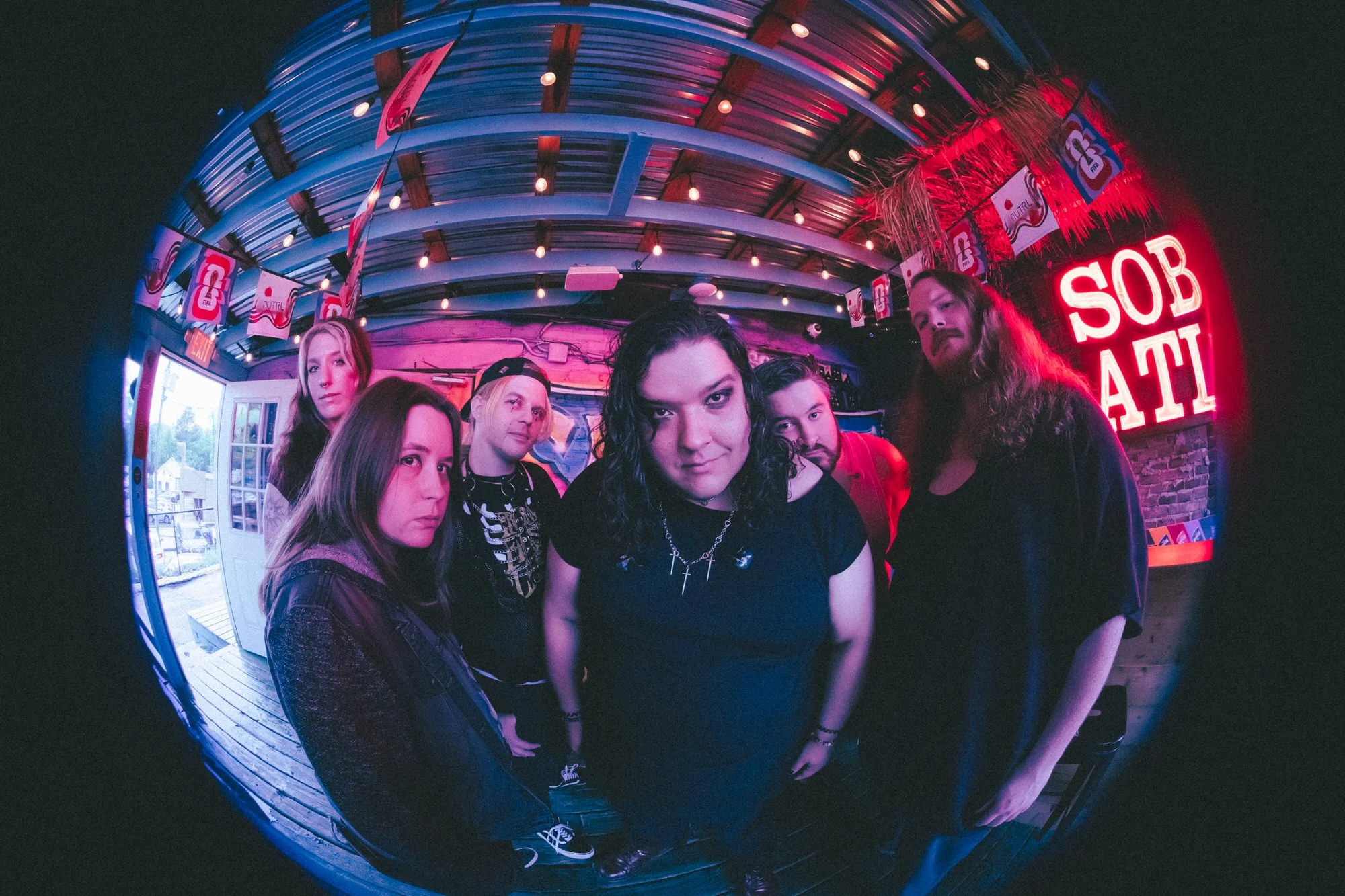
© Ellen Arden
Words and Photos by Ellen Arden
Thunder rolls across the back deck at Smith’s Olde Bar as bands drag gear through the venue’s side entrance. The weather threatens to break open at any moment, but nobody seems particularly concerned. Members of Soul Meets Body, Kyle Lewis Is a Boring Name, and K3YP4RTY drift between conversations as load-in continues around us. Tonight’s lineup is diverse, welcoming, and comfortably difficult to categorize. Everybody seems to belong here.
Which, as it turns out, is a pretty accurate reflection of Sister Sleep.
The Atlanta-based six-piece — Jamie Shelton, Kit Savvy, Kellie Burkhalter, Chase Cowan, James Holloway, and Riley Mikles — has built its identity around emotional honesty, collaborative songwriting, and a commitment to creating spaces where people feel safe showing up exactly as they are. Their music pulls from post-hardcore, emo, alternative rock, industrial textures, and theatrical flourishes, but the band’s real center of gravity is not genre. It is community. That idea continues to surface whether they are talking about songwriting, queerness, touring, younger audiences, or the future of Atlanta’s music scene. Nearly every answer eventually circles back to the same place: connection.
The band emerged in 2020 from the remains of a previous project called The Keepsake. Several members had already spent years playing together before the pandemic forced an unexpected pause.
“Everything shut down,” Shelton recalls. “We were still writing and stuff because most of us lived together at the time. Then we decided that the direction we were going with the music made more sense. So, when things opened back up, we decided to just start over. A new band, a new name, new everything. A lot more focused. A more cohesive vision.”
What could have been a setback instead became a moment of clarification. With touring, shows, and everyday momentum suddenly on hold for the world, the band had time to think seriously about what they wanted to build and how they wanted to build it.
“It was one of those things where it also did a lot. We actually could sit down and go, okay, this is what we want to pursue and this is how we want to pursue it,” Savvy says. “We came up with themes, we came up with the name, we came up with like all the ideas kind of at once, and were just able to go for it. From there we were able to branch off and eventually get to where we're at now.”
That hard reset would eventually become Sister Sleep.
The band now exists during a moment when emo and post-hardcore have once again entered public conversation. Two decades after the genre’s commercial peak, the sounds and aesthetics associated with My Chemical Romance, AFI, Silverstein, Chiodos, and The Used are appearing everywhere again. Reunion tours are selling out, younger artists are pulling from the emotional intensity of the 2000s scene, and a new generation of listeners are discovering bands they were too young to experience the first time around.
Some of that resurgence is nostalgia, but much of it also feels like a reevaluation of music that was often dismissed despite how deeply it connected with people. For Sister Sleep, those influences are less about nostalgia than inheritance. The band embraces that lineage, but treats it as raw material — something filtered through six perspectives, multiple identities, and a very different cultural moment.
“You have to do something different,” Shelton says. “I feel like we are at a time where nostalgia is a thing and everyone is sort of cashing in on it. But these things go in cycles. I think nostalgia is definitely a thing, but that's why I think it's so important to see the growth within things like the DIY scene and all that. I think there's so much that bands are doing that is new and a fresh take.”
“And we all have different influences beyond that genre,” Mikles explains. “Having so many members to filter it through means ideas come out differently. Talking through ideas, we’re able to make it something more unique and more us.”
After years of writing together, the members have learned to trust one another’s instincts, even when the destination is not immediately obvious.
“Sometimes it's just like, I don't get what we're doing,” Shelton says, laughing. “But I trust that y'all really do.”
That willingness to follow an idea wherever it leads extends beyond the band itself. Since the beginning, Sister Sleep has worked with producer Aaron Pace, whose role often feels closer to a collaborator than an engineer.
“He helps us contextualize it,” Shelton says. “Trim the fat,” adds Savvy.
Songs arrive from everywhere: fully formed demos, isolated riffs, melody fragments, voice memos, and half-finished ideas tucked away in shared folders. Some are completed quickly. Others are torn apart, reshaped, and rebuilt before finding their final form.
“We are not ashamed to cannibalize our own ideas,” Holloway jokes.
While some of Sister Sleep’s songs draw inspiration from films, concepts, or fictional narratives, personal experience remains the foundation of the band’s work. Anxiety, grief, depression, isolation, and self-discovery appear frequently throughout their catalog, but the songs rarely feel like confessionals for confession’s sake. Instead, they become openings — ways of turning private feeling into something shared.
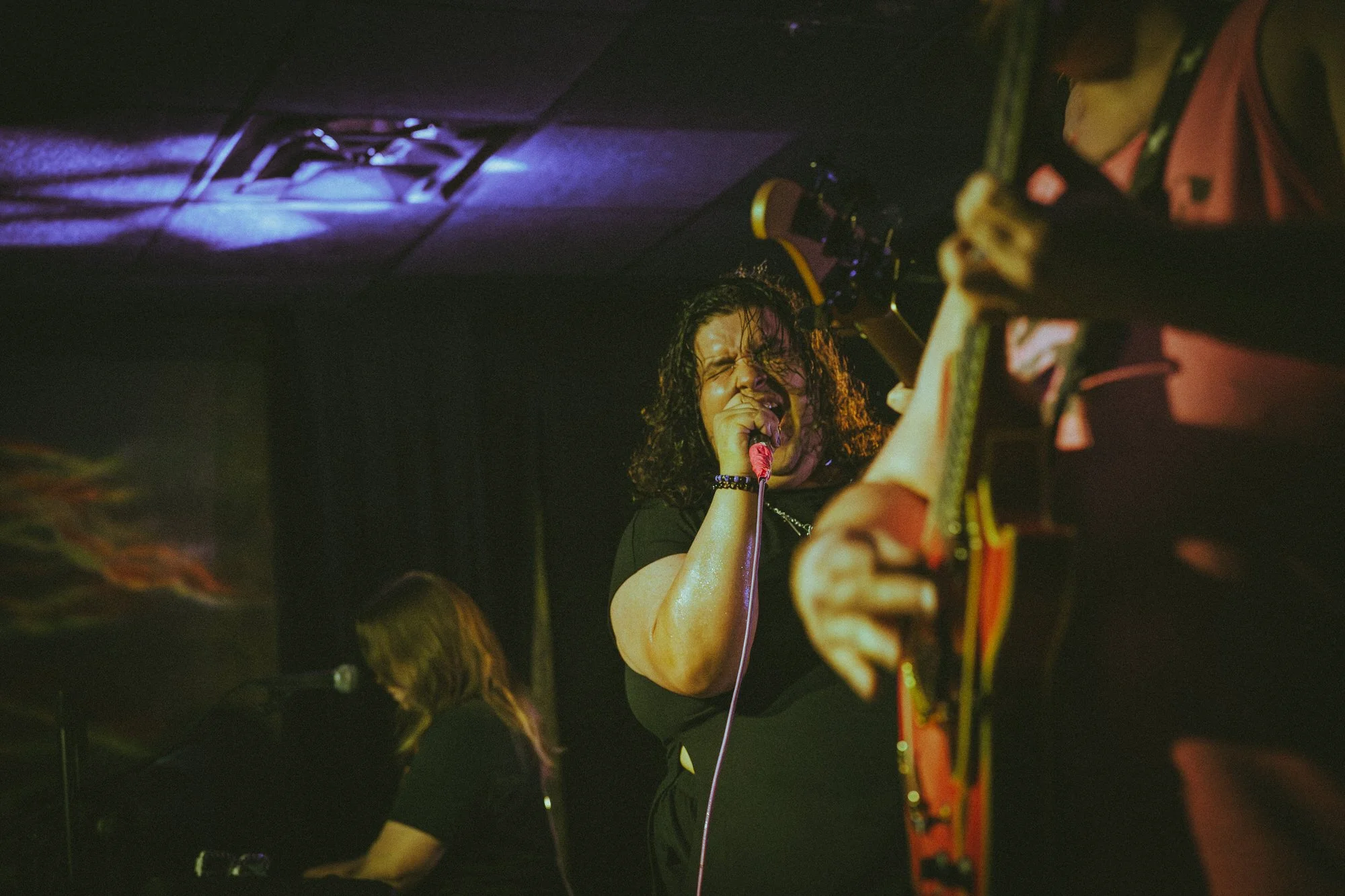
That idea surfaces repeatedly throughout the interview. Cowan describes experiencing songs emotionally before understanding them intellectually. Shelton talks about recognizing those feelings and translating them into lyrics. Holloway describes music and words influencing one another until they eventually arrive at the same destination.
“I try to be as candid, transparent, and vulnerable as possible,” Shelton says. “Catharsis is such a special relationship between listener and artist.”
For Sister Sleep, music becomes a way for people to see themselves reflected back through someone else’s experience. That same philosophy shapes how the band approaches queerness, community, and the spaces they hope to create around their music. The band describes itself as a queer emo-core band, and several members identify as queer or trans. Shelton explains that those life experiences inevitably shape the band’s perspective.
“It's inherently something that paints it,” Shelton says. “It helps color the music in a unique way.”
Yet what stands out throughout the conversation is not identity used as branding or marketing, but identity as a means of fostering visibility, safety, and belonging.
“I don't want people to confuse where we stand,” Shelton says. “I never want to be a band that people feel comfortable spouting hateful rhetoric around.”
“My whole thing is about just having a place where you can feel safe because you know that the queer voices are heard and unapologetically so,” Savvy adds.
For Mikles, representation and simply existing openly can have a powerful impact.
“It's important to be visible,” Mikles says. “To give permission to the next generation, you know, like, look I’m gay and I’m fine. You can do that too, even if your home life sucks. I think we try to make it as open as possible, so it's obviously a safe space for everyone.”
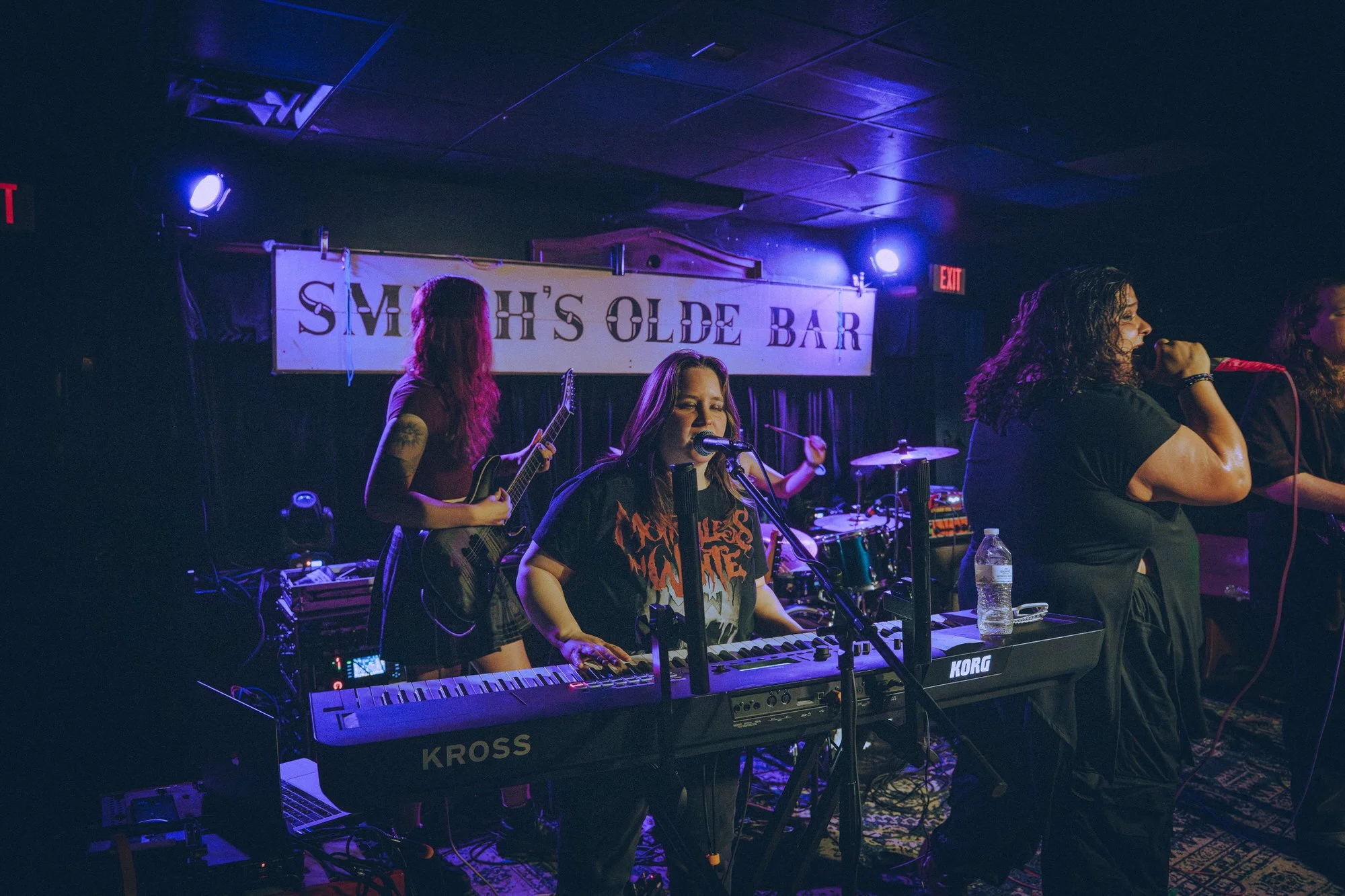
That desire to create space for others naturally expands into a larger conversation about Atlanta’s music community. While the city is often recognized nationally for hip-hop, its punk, emo, hardcore, and alternative scenes continue to thrive in DIY spaces, smaller rooms, and local venues scattered across the metro and surrounding areas. The members of Sister Sleep describe those scenes as overlapping communities, connected by the same artists, promoters, venues, and audiences who continue showing up for one another.
When asked about supportive bands within Atlanta’s musical ecosystem, the members quickly point to The Callous Daoboys, Muelas, Over Anna, Tiny Banshee, and others who have spent years building opportunities for fellow artists. What they admire is not simply success, but generosity.
“They're always trying to do what's best for everyone, the collective, and the community,” Shelton says. “That’s important because we benefit from that and then can also pass it on,” adds Cowan.
It is that network of support — more than any single genre — that the band believes makes Atlanta special. But at the same time, several members point out the disappearance of gathering places for young people and the shrinking number of opportunities for teenagers to participate in local music culture.
“It's important that kids have a place to go and let loose in a safe environment,” Mikles says.
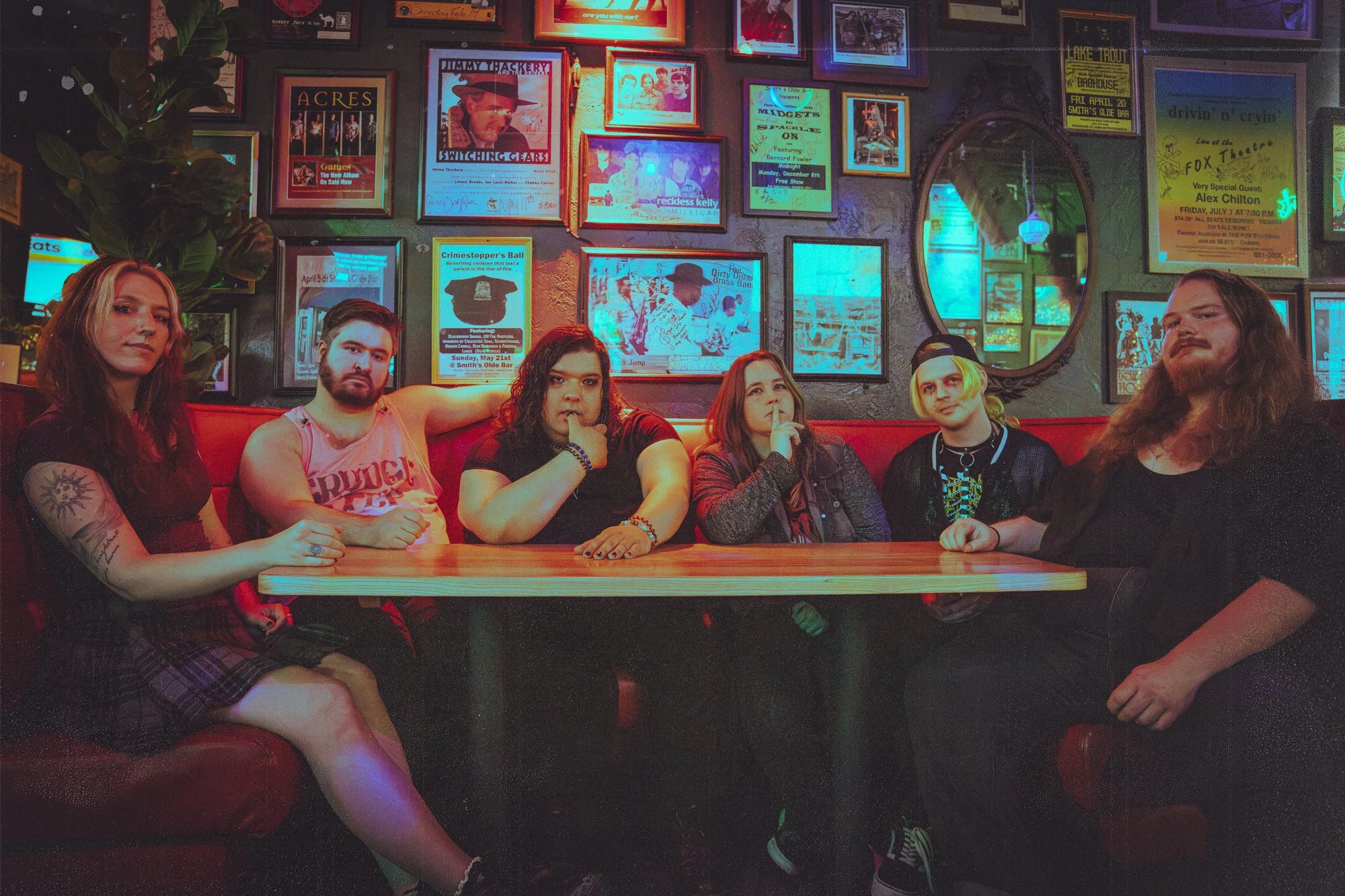
What’s Next For Sister Sleep
A sense of identity and clarity is carrying Sister Sleep into their next chapter. The band is currently finishing work on their first full-length record, a project that has been in development for roughly a year and a half and recently entered the tracking phase. They are careful not to give too much away, but the excitement around it is obvious.
“It's the most us,” Shelton says.
For a band that started over in search of a clearer vision, that matters. Sister Sleep did not emerge from the pandemic trying to recreate what came before. They came out of it with a new name, a wider emotional vocabulary, and a stronger sense of what they wanted their music to hold: grief, anxiety, queerness, catharsis, theatricality, and the kind of community that makes people feel less alone.
Follow Frequency.ATL for local music news, interviews, and more.
CREDITS :
Interview: Ellen Arden
Editing: Tyler Brune
© FrequencyATL