
Fleeting by Design : Irreversible
© Matt DeBenedictis
Words by Ellen Arden
Photos by Matt DeBenedictis
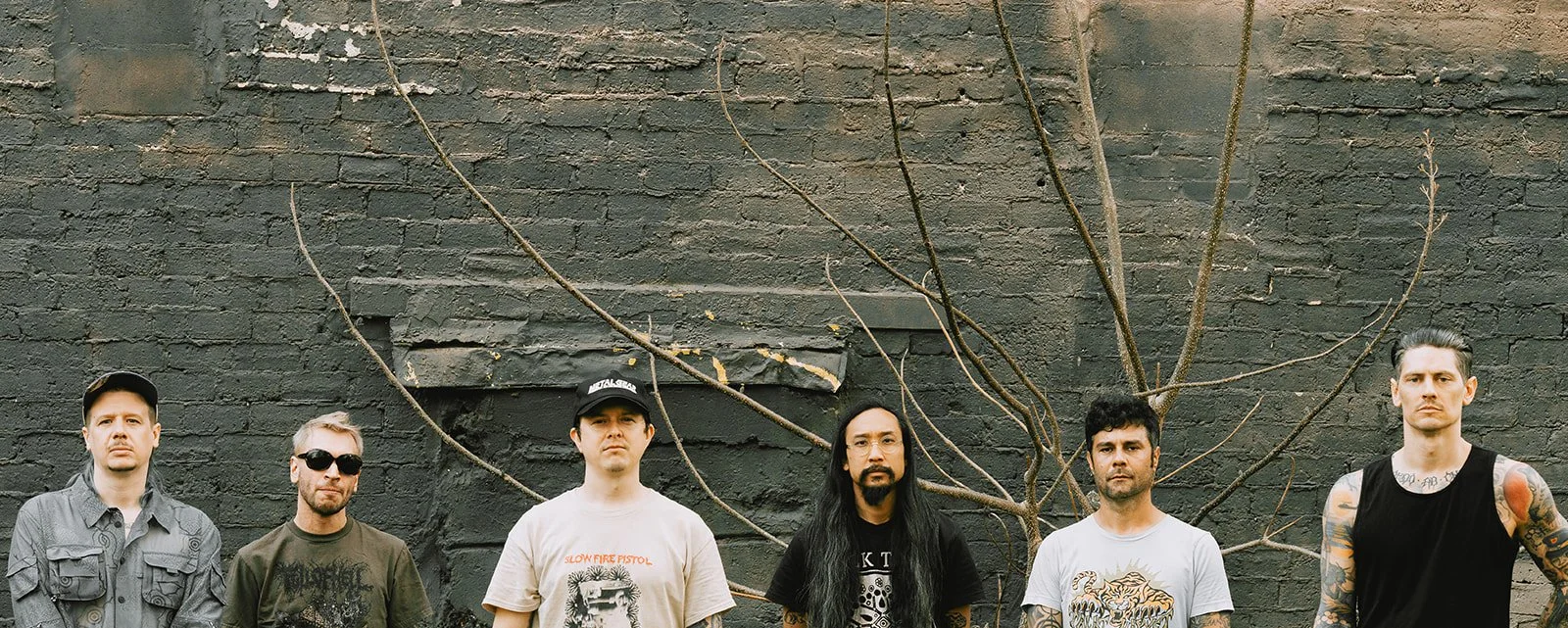
Atlanta’s long-dormant sludge/post-metal institution Irreversible returns with Vessel, its first new release since 2015—a two-track, forty-minute record split into side-long movements: “Esus” and “Thoth.”
The album debuted on March 13th through Dipterid Records, produced by the band and built around themes of mass psychosis, dreams, death, and postmodern absurdism, with film samples from Blue Velvet, Memoria, and The Beast.
We caught up with Irreversible’s Jackob Franklin, Zach Richards, and Justin Brush at The Earl just before their record release show to talk about the band’s history and how Vessel came together across state lines, experimentation, and time.
The band’s history has always carried a certain abrasion. According to Zach Richards and Jackob Franklin, Irreversible formed out of Atlanta’s early 2000s punk and straight-edge hardcore scene, when they were still teenagers navigating warehouse shows and finding their place within the scene. The earliest version moved fast—short, hardcore-rooted songs that resulted in an eight-minute EP. It wasn’t until they slowed down and eased into something more psychedelic, sludged-out, and cinematic that they began to find their sound. Richards describes the through-line as consistent even when the form changed: “Each album… has a different feel,” but the band’s current work still belongs to the same larger language.
That part tracks with their discography, which shows a run from Age (2006), Sins (2007), Light (2009), Thorn (2012), Surface (2014), and the self-titled Irreversible (2015). The older material maps the band slowly pushing out of hardcore velocity and into longer, heavier, and more atmospheric forms. Surface in particular already had the stretched nerves and post-metal patience people still associate with them, while the self-titled record doubled down on samples and bleak conceptual framing.
Then they disappeared, more or less.
Richards says the spark to restart came from two outside forces: a request to press Sins on vinyl and an offer to play with industrial legends Godflesh in Atlanta. The show happened in 2023 and reopened the possibility of making new music. Franklin adds that geography had already done its damage—he had moved to Seattle, the band had stopped functioning regularly, and Irreversible had become one of those names that linger in local memory long after the room has gone quiet.
That context makes Vessel hit harder. It isn’t just “the first record in ten years.” It’s the sound of a band figuring out how to exist again without being in the same state—or even the same room—now balancing families, jobs, and everything else that comes with getting older. Richards notes the record was built remotely, with riffs, drum ideas, and revisions passed back and forth online. Franklin says they only had two full rehearsals before the show. And still, somehow, they landed on a record this deliberate.
Part of that deliberateness comes from how the band approached their gear this time around. The process wasn’t just remote—it was intentional down to the sound itself. Richards reworked his drum setup, building around larger, deeper toms that forced him to simplify his playing. “My rack tom is a 16-inch, and my floor tom is an 18-inch… I had to be careful… not to muddy it up,” he says. Franklin, on the other hand, leaned into consistency, building his tone around vintage amplifiers. “Everything that was made in the 60s, 70s, and 80s… it just works,” he says. For Justin Brush, the approach was even more distilled—anchored by a Boss DD-20 delay pedal that has circulated within the band for years. “It’s literally stayed within the circle of this band forever,” he says. Together, those choices along with a new recording process shaped the sound of Vessel as much as the writing itself.
That deliberateness is the whole point of Vessel. The album, which took approximately two years to assemble, is structured as two twenty-minute pieces because the band wanted that boundary—something symmetrical, intentional, almost architectural. Richards calls the music “cinematic metal.” It could sound corny in lesser hands, but here it feels accurate. These songs move like scenes — long, severe blocks of pressure that shift just before they calcify.
The contrast between the two tracks is where the record gets interesting.
On “Esus,” Irreversible aims lower, meaner, and more hostile. Franklin says the track is tuned lower, more aggressive, and is partly informed by hearing Primitive Man and wanting to make something “really, really off-putting and negative.” It carries a mechanical weight. It is dense, punishing, and unrelenting, pulling from the harsher edges of sludge and industrial without ever settling into something completely predictable — with multiple publications describing the album’s range as moving from noise to buzzy sludge to post-metal atmospherics, while notes for the release point toward Meshuggah, Swans, and Cable as touchstones for the track’s brutal first movement.
“Thoth,” by contrast, is the record’s light source. Not bright but phosphorescent in nature. Franklin describes it as gentler, softer, and more classical in contour,” a song that looks inward and “offers a meditation on the cyclical nature of life.” However, the song doesn’t quite erase the heaviness and the darkness but gives that darkness a horizon. The band’s Bandcamp page also connects the track to the shoegaze doom of Jesu and the space-rock intricacies of Cave In, which makes sense: “Thoth” has that drifting, half-levitating quality those bands understood, where heaviness stops being about impact and starts behaving like atmosphere.
© Matt DeBenedictis
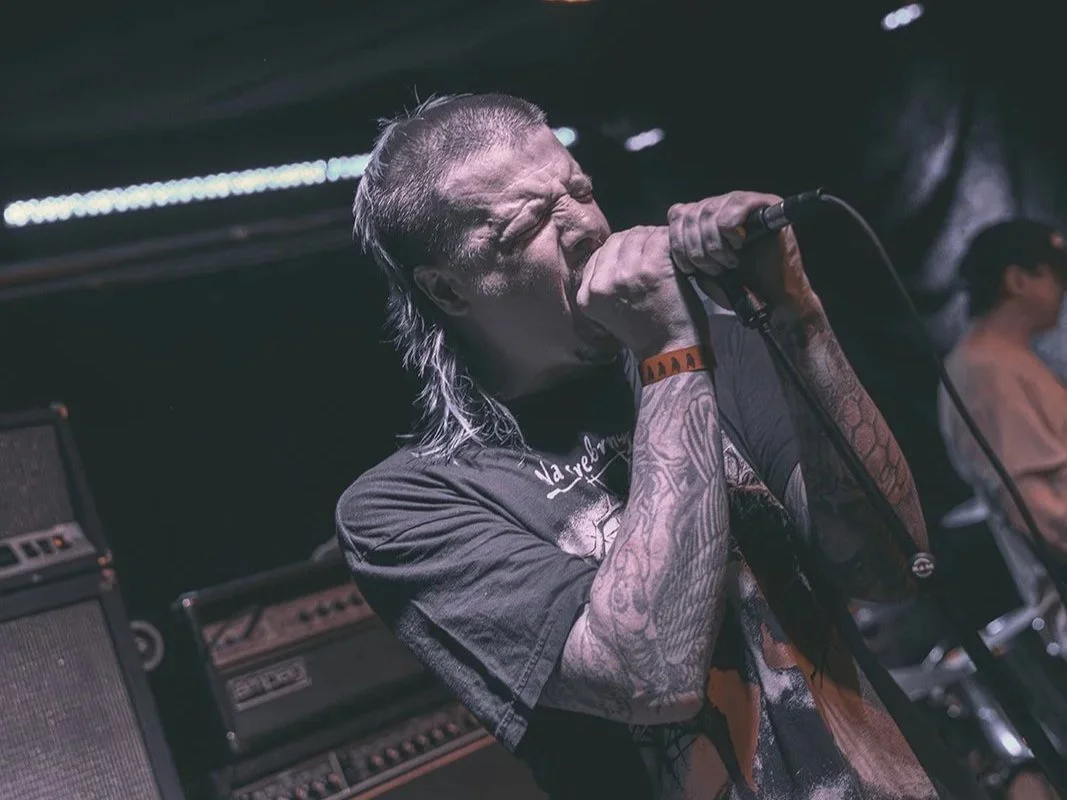
The band refuses to pin one meaning to the title of the record — Vessel. Richards says Irreversible keyboardist/vocalist Billy Henis came up with the title, framing bodies as vessels for whatever is happening. Franklin also connects the idea to Earth’s Dylan Carlson, who has described songs as “something that comes through you rather than something you simply engineer,” with Richards adding that “the music makes itself through us.” The band also ties the record to deity figures and open-ended symbolic language, preferring interpretation over fixed explanation. In other words: Vessel is not asking to be decoded, it wants to keep changing shape in your hands.
That puts Irreversible in a particular lineage. Not just sonically—with the usual post-metal/sludge names hovering nearby—but structurally, in the way some bands in this world appear only when they have something severe enough to justify the disturbance. Godflesh famously operated through long periods of inactivity before returning in the 2010s, and as of March 2026, guitarist/vocalist Justin Broadrick has said the band is done as a live act. Khanate likewise spent years dormant before its 2023 return. Irreversible belongs to that kind of timetable: not absent, exactly, just unwilling to treat release cycles or live appearances like routine content production.
Maybe that’s why Vessel feels so intact yet fleeting.
Franklin says flatly that Irreversible makes music for themselves first and once it’s “created and out of them,” they move on. Richards is even more direct about the band’s relationship to performance: “play it once, maybe a couple times… and if, you know, 20 years go by, maybe we’ll play it again.”
© Matt DeBenedictis
IRREVERSIBLE
Jackob Franklin — guitar, vocals
Zach Richards — drums
Billy Henis — keyboards, vocals
Spencer Ussery — bass, vocals (“Thoth”)
Justin Brush — guitar, vocals (“Esus”)
Johnny Dang — guitar (“Thoth”)
Lyrics by Franklin (“Esus”) and Henis (“Thoth”)
Follow Frequency.ATL for local music news, interviews, and more.
CREDITS :
Interview: Trudie Storck
Editing: Tyler Brune
© FrequencyATL