
Tombstone : The World Outside
Words by Ellen Arden
Photos by Matt DeBenedictis
Atlanta’s hardcore scene didn’t spring up overnight. It grew from decades of underground kinetic energy, a persistent community, and diehard resistance to the polished mainstream. From early punk and hardcore bands like Neon Christ in the 1980s, to the ongoing wave of DIY venues, and the homegrown acts of today — Atlanta’s underground punk and hardcore culture exists right alongside its globally famed hip-hop counterpart. It’s a culture rooted in physical presence and driven by a do-it-yourself ethos and a tight-knit community that prizes real-life connections.
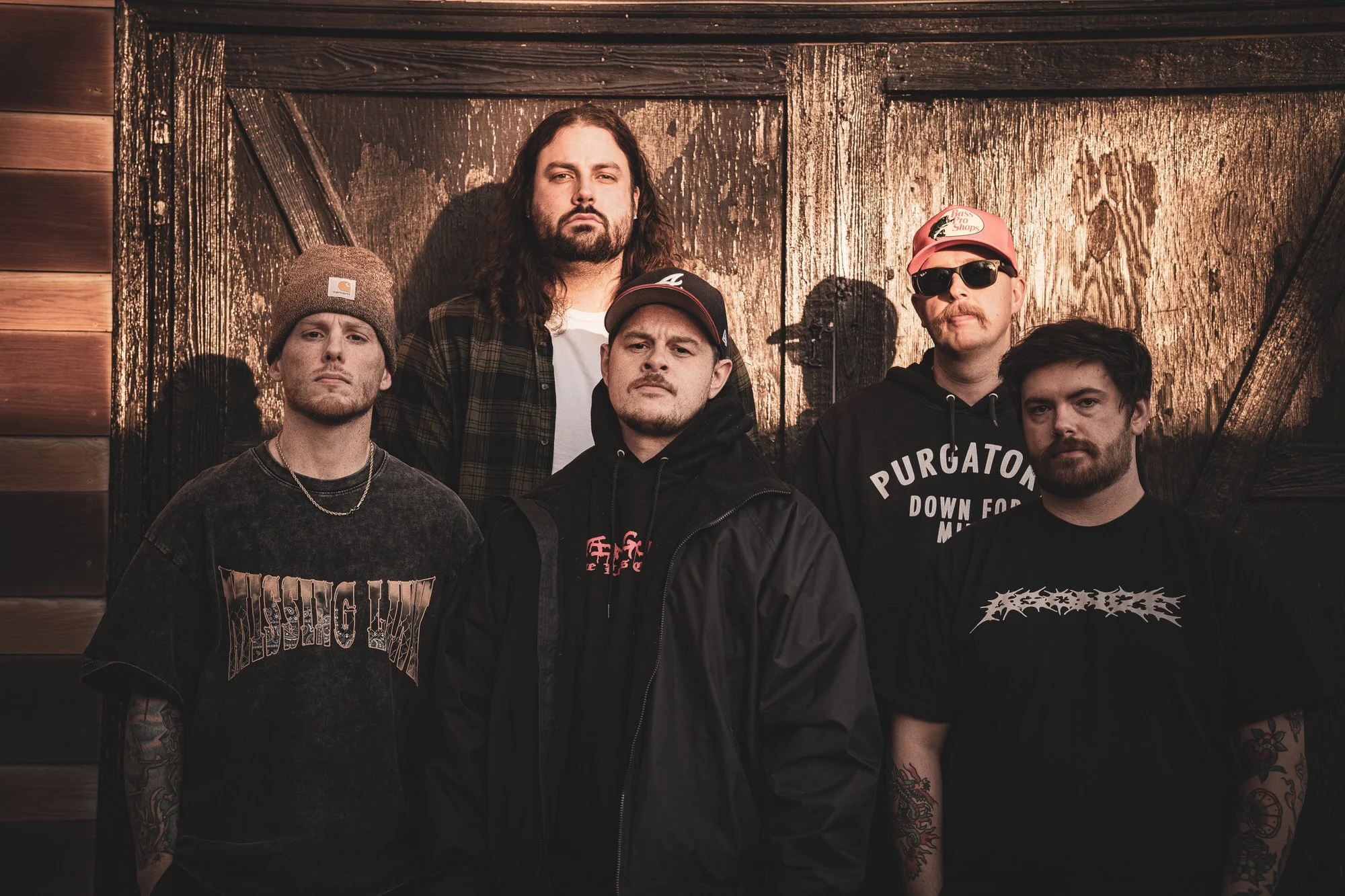
Atlanta’s own Tombstone recently sat down with Frequency ATL to talk about their new recordings, recent shows, and the ever evolving Atlanta hardcore scene.
FROM DISPOSE TO TOMBSTONE
Tombstone’s roots trace back to a project called Dispose — an early iteration that began as guitarist Wes Daniel and vocalist Zack Goodwin started writing together in 2019. “Dispose was a fun project and a great way for us to get back into making music,” Zack explained, “but ultimately just not the sound we wanted.”
Soon after, bassist Cody Roberson was brought into the fold, initially to write songs and to start playing shows. From there, the band developed naturally into something heavier. “It just kind of evolved into a whole other beast,” Cody says. “We added more members — guitarist Brannen Pidgeon and drummer Reid Clark — wrote more music, changed our name, and found our image.”
There wasn’t a moment where they sat down and decided what Tombstone should be, there was no stylistic blueprint. It happened the way hardcore bands often come to be: people you’ve known forever finally locking into a collective vision that seems honest and real.
THE GATEWAY TO HARDCORE
Many musicians can pinpoint a song or a show where they discovered something that drove them to create. When asked about what brought them all to hardcore, they reminisced about church shows and the friends and bands that introduced them to the genre.
“That night something was rewired for me,” Cody remembers. “It was Terror with Foundation opening… in this little tiny warehouse. I went to that show and said, ‘I wanna go to every hardcore show I can.’ It was just a totally different energy.”
“It wasn’t all choreographed,” he says. “It was super raw emotion… hearing somebody screaming the things you think in your head. You’re like, ‘yes — someone else fucking gets it.”
Wes mentions a trip to London to see The Ghost Inside pushed him closer to hardcore. “I started going to see Backtrack every time they came to Atlanta,” he says. “That kinda pushed me in that direction.”
RIFFS, LYRICS, AND INFLUENCES
Tombstone’s songwriting process is deliberately simple and built around self-editing. “I sit in my basement, write riffs, track them, and try to put drums to them,” Wes says. “If I like it, I send it to them. If I don’t, I don’t.” Cody laughs: “So they never hear it.”
There’s no attachment to time spent. “I’ll work on a song for six hours,” Wes admits, “then listen back and think, ‘nah — that sucks.’” The rule is blunt. “If you can’t listen to your own band,” Cody says, “what are you doing?”
The band avoids overthinking their sound. They write music they want to listen to, can stand behind, and hope others connect with it too. Lyrically, that same honesty applies. They steer clear of abstract concepts in favor of real experiences and personal struggles. “We’re not throwing weird metaphors in there,” Cody explains. “It’s taken from real life — his life, my life. We try to be relatable.”
Zack puts it simply: “We just make sure what we write is mean, heavy, and honest.” That honesty comes from lived experience. “We’ve all worked blue-collar jobs,” Cody adds. “You get tired of it. It’s pissed-off music.”
Despite the heaviness, their influences stretch wider than expected. “Green Day,” Wes says immediately. “I love Green Day.” It’s less about imitation than memory. “My dad played Dookie in the truck on the way to school. That stuff sticks.” He also cites ’90s country as an influence.
Zack came up through rap and nu-metal. “I grew up on Pantera and Eminem,” he says. “I knew I loved hard riffs and pissed-off lyrics when I was like 12.” That combination hit early and it’s been his style ever since.
DIY OR DIE: SPACES, COMMUNITY, AND REAL LIFE
Tombstone sees hardcore as more than music — less a genre than a way of life. It’s rooted in real community: friendships that last decades, people checking in on each other, and scenes that feel like families rather than crowds.
“Hardcore is just a place to hang out with your friends and like-minded people,” Cody says. “That’s why we’ve all been in a bunch of bands. Somebody gets busy and then you start another one.”
As an Atlanta band, that sense of community carries weight. They talk about representing the city with pride when playing out of state, treating Atlanta hardcore as something you’re responsible for carrying correctly. “When we go to another state, I feel like we have to represent Atlanta,” Cody says. “It’s something to be proud of.”
The scene stays tight by design. “A lot of the friends I’ve made in life are from hardcore,” he adds. “I’ve gone to their weddings. It’s real community.” They also shout out bands they’re excited about right now — Turn Cold, Stampede, Powers That Be, Identity Shock, and No Pulse — and venues like Culture Shock and South Bend Commons, where they feel genuinely supported.
At the same time, they’re honest about how fragile DIY spaces can be, stressing how quickly a good spot can disappear if people don’t respect it. They fondly talk about Nashville as a home away from home, with Dark Matter as a favorite venue there, and describe the way those repeat faces in the crowd create a familiar, community-driven atmosphere while away from home.
“Anytime we play Nashville,” Cody says. “We always leave like, ‘fuck yeah — this is why we do this. And it’s scary playing another state on a weekday,” he adds. “You just never know. But when it hits, it hits.”
A WORLD OUTSIDE & WHAT’S NEXT
Their newest EP, The World Outside, came together in an intentionally unglamorous way.
“We did it all at my house,” Wes says. “Tracked guitars there. Drums there. We just figured it out as we went.”
Songs Under The Gun and There Must be an Enemy feature guest spots with friends Fools Game, Rules of Engagement, and Maul. These guest spots followed one rule: friendship. “Guest spots are only cool if you’re actually friends with the person,” Cody says. “Otherwise it’s just random.”
He points to meeting Fools Game through past connections, including filling in on bass for Life of Pain, and to relationships built while playing Nashville with the likes of people like the vocalist of Rules of Engagement, who also promotes shows and has helped Tombstone land gigs.
As for the future of Tombstone—
They’re grown adults with jobs, PTO, and responsibilities — but the intention is still the same: keep it heavy, keep it honest, and keep showing up.
“We’re just gonna keep writing the hardest shit we can think of,” Zack says, “and play shows as often as we can.”
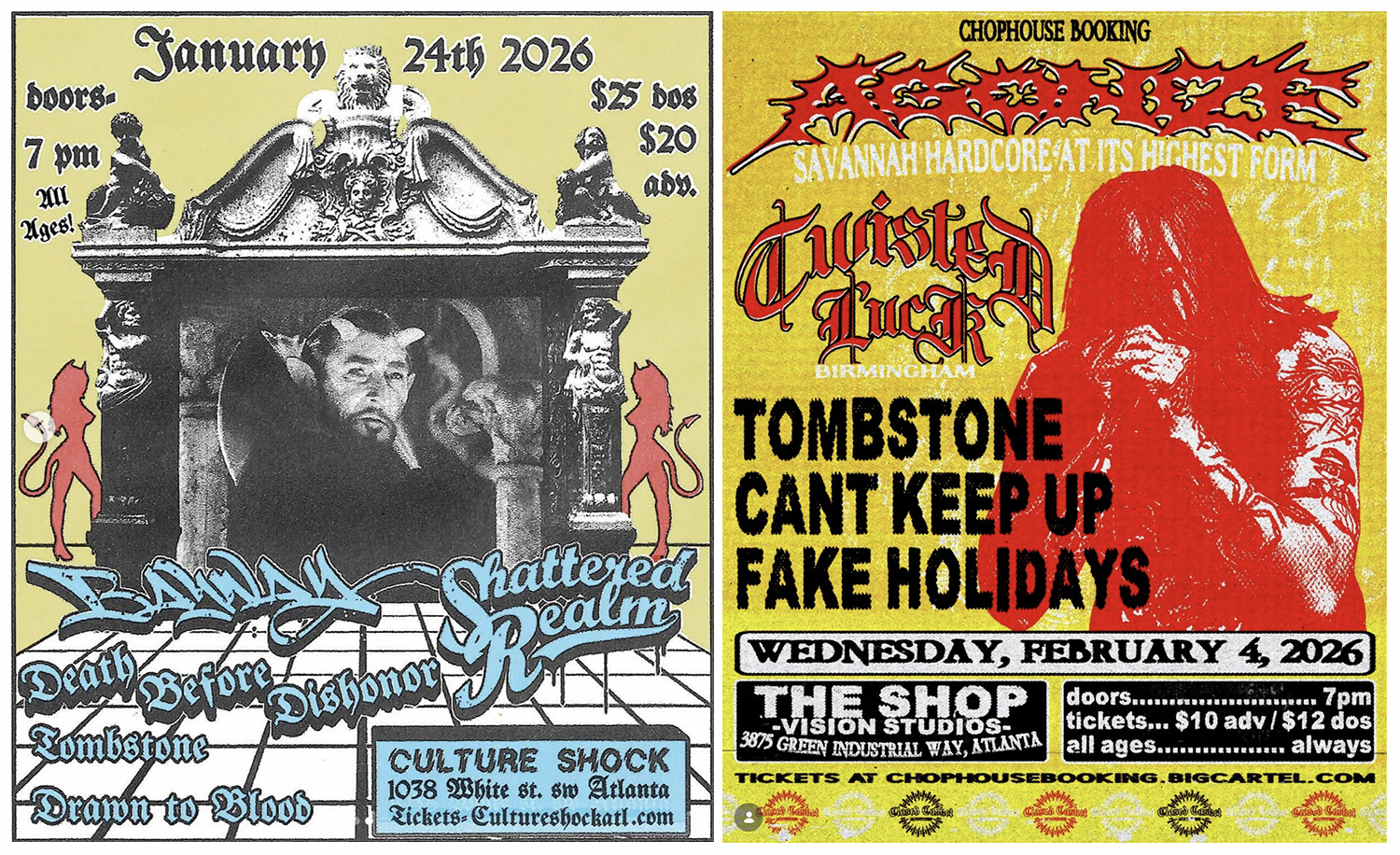
Catch Tombstone on January 24th, 2026 at Culture Shock with Bayway, Shattered Realm, Death Before Dishonor, Drawn to Blood — and on February 4th, 2026 at The Shop in Atlanta, GA with Agonize, Twisted Luck, Can’t Keep Up, and Fake Holidays on.
Follow @frequency.atl for local music news, interviews, and more.
Credits :
Interview: Matt DeBenedictis
Editing: Tyler Brune
© FrequencyATL