
No Safety Net: Inside Parachutes’ Atlanta Ascent
Words & Photos by Ellen Arden
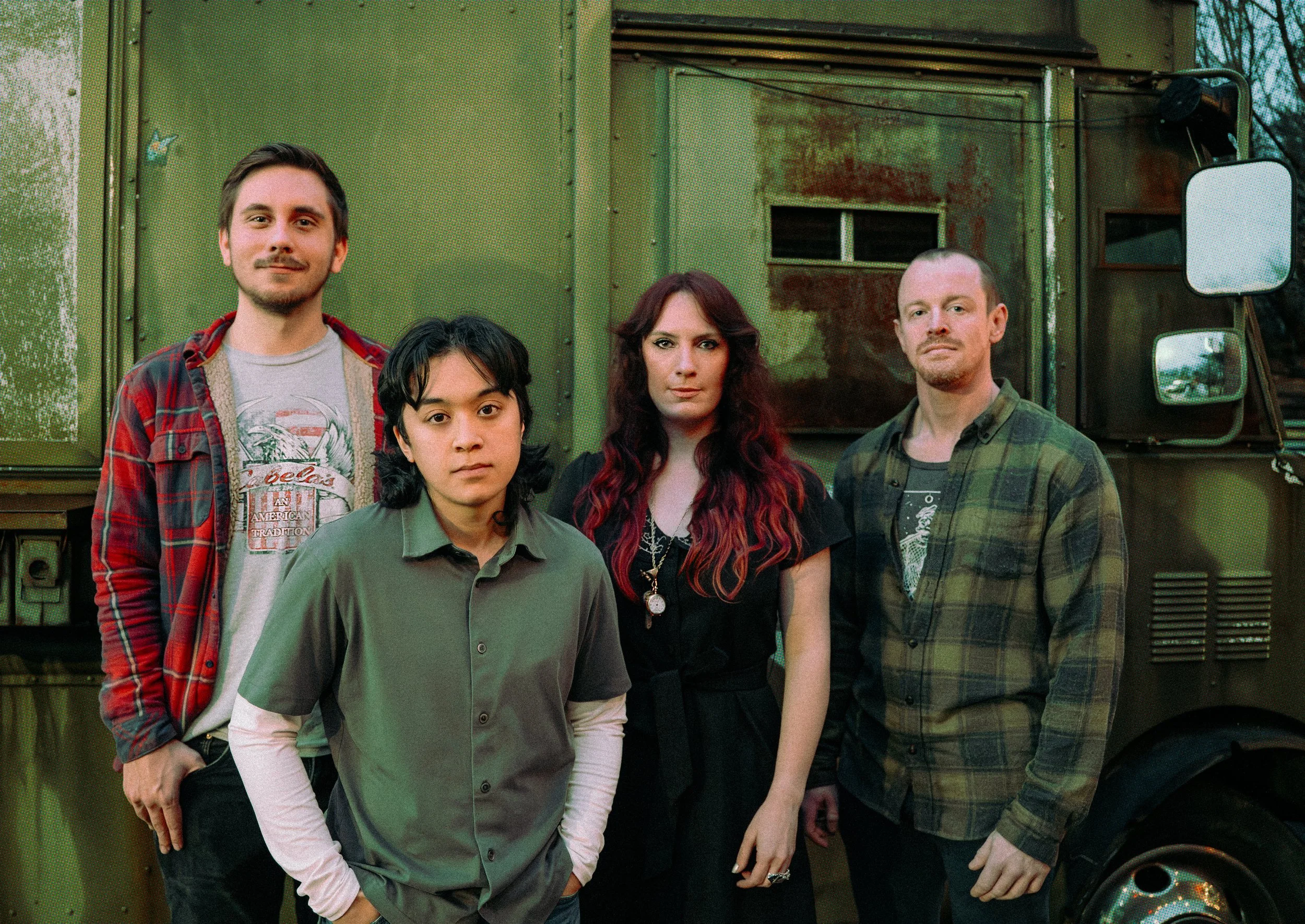
Built from a Reddit post, a shared love of riot grrrl bands, and a refusal to over-polish their sound, the band Parachutes have quickly become an onstage fixture in Atlanta. With their live sets flirting with disorder and their momentum coming less from hype than from the repetition of playing often and playing loud.
FrequencyATL recently caught up with the four-piece just before their set at Boggs Social and Supply to talk all things porchfests, embracing imperfections, and
Built Online, Tested in Real Life
Parachutes started the way a lot of bands actually start these days: the spark of inspiration from an iconic show, leading to a post online, followed by a “this could be sketchy” first meeting of the minds.
Guitarist Rachel Burdge traces the first real nudge to launch the band to a Sleater-Kinney show. The energy, the audience, and the feeling that women-fronted rock bands should take up more space in Atlanta than they’re typically given. The next day Rachel landed in the Atlanta Music subreddit and saw a post: “Hi, I wanna start a garage rock band.” She took the chance, met with singer Megan Faye, and all the pieces began to fall together.
Drummer Scott Ellison was already orbiting a similar idea with Rachel during their time together working on a tribute band project. The band quickly became three people with demos and lots of momentum but one urgent need remained, they needed a bassist. Enter Neal Aronson, who would go on to become a key part of the band’s current “anything can happen” style.
Parachutes’ origin story feels modern; community-built, internet-assisted, and scene-driven, but their sound is knowingly referential in the best way. The band pulls a lot of sonic influence from the riotous end of the ‘90s and early 2000s rock revival, but then pushes it toward something sharper, dirtier, and louder.
Big Hooks and A Distorted Sound.
Ask Parachutes about their sound and you get answers that actually fit the music — “energetic,” a little chaotic, and built for movement. Rachel quickly describes the band as “somewhere in the middle of The White Stripes and Paramore,” which sounds wild until you realize it’s basically the band’s whole thesis—big hooks with a highly expressive singing style, surrounded by a wall of noisy distorted guitars, reminiscent of Yeah Yeahs Yeahs art rock. As a listener you can easily find their influences neatly tucked into their sound.
Megan notes that Parachutes was born out of absence as much as it was out of influence. “Growing up, there weren’t a lot of female fronted bands,” she explains. “I’d been on a lot of electronic, hip-hop, and pop-based projects, but I really wanted to do punk, alternative, garage rock.” She points to the current riot grrrl resurgence as fuel, alongside formative influences like No Doubt, Garbage, Hole, and ‘90s grunge. “We’re trying to be part of that late-’90s, early-2000s garage rock revival,” she says, “but mixing in indie, punk, grunge—and modernizing it.”
That blend of garage adrenaline, an indie rock mind, and punk rock impatience explains why their songs can slide between styles without feeling like too much of a costume change. Scott puts it plainly: “a Parachutes track might drift from surf rock to disco and still feel natural, because the band’s skill set and instincts are loose enough to let that happen.”
Writing Fast and Refining in Real Time
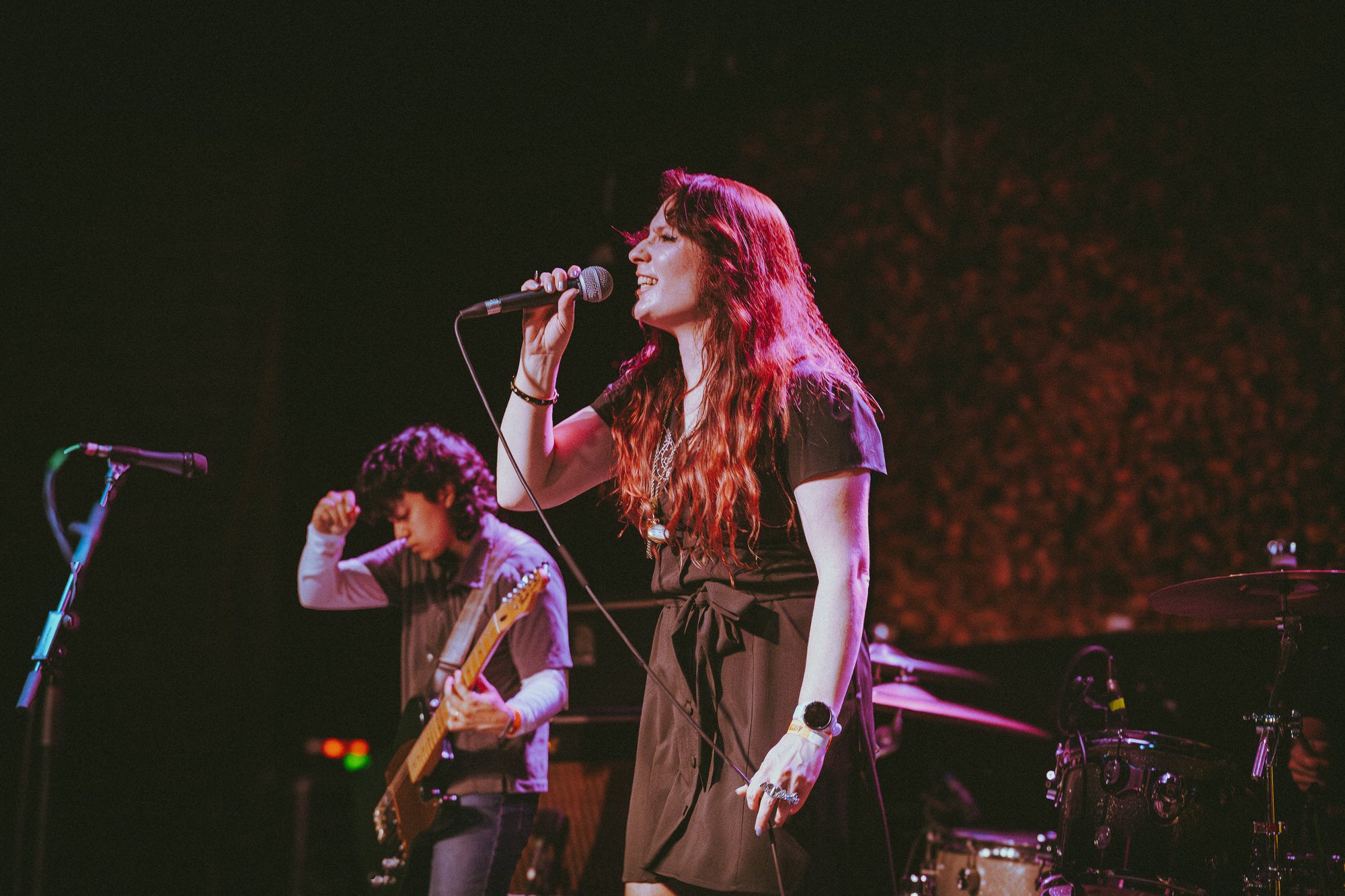
Their writing process mirrors the same urgency as their sound. Songs usually start as a demo from Rachel or Neal, then get dismantled in rehearsal and sharpened live. “A lot of stuff we write really quickly,” Rachel says. “Then it just gets refined through live performances instead of taking forever to perfect it before we play it out,” letting the crowd and the stage teach them what needs to tighten.
A strong emphasis on the stage has shaped the band more than anything else. “I think the live performances are the key to our band” Megan says. “We’ve really worked on the flow and the vibe of our sets. Everybody gets moments. And now that we’re comfortable, we can bring in more chaos while still sounding good.” Neal agrees, noting that over time the band has picked up “more musical tricks,” and is always a working collaboration and developing stronger performance instincts.
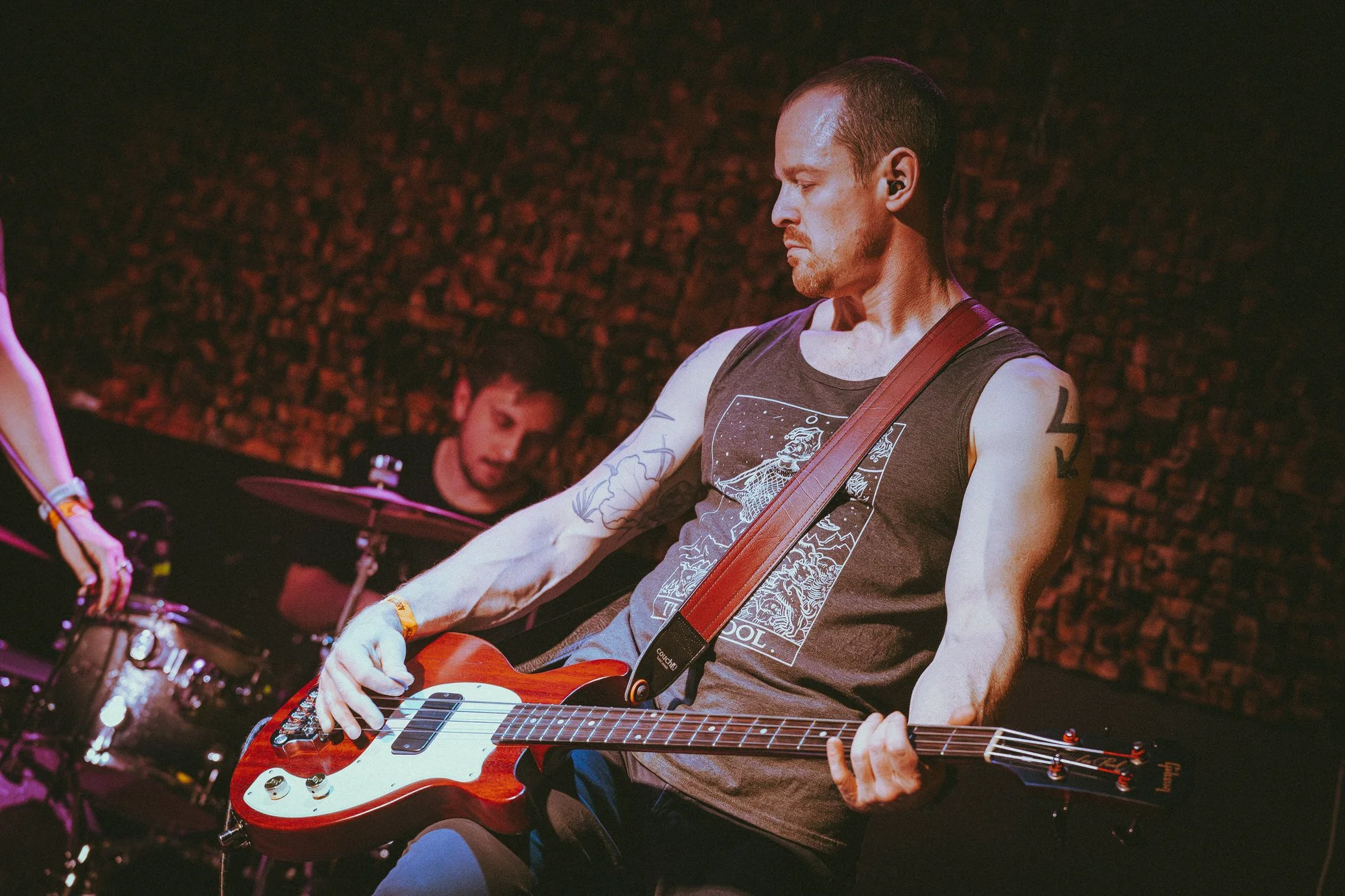
Their overall garage band approach carries over into how the band thinks about their gear. Neal, who came to bass after years of playing guitar, built his setup by looking to players like James Jamerson and Carol Kaye: flatwound strings, a P-bass foundation, and an Ampeg amp, later evolving into a short-scale Gibson Les Paul bass pushed through fuzz. Scott’s drum setup is unglamorous by design—a patchwork kit anchored by a Premier set he picked up for cheap in some guys basement, which is proof, in his words, that “you can make anything sound really good as long as you know how to play it.”
Rachel’s rig leans into noise and movement: rotating guitars with a preference for Fender bodies, a Vox AC15 she calls her favorite amp “in the entire world,” and a pedal chain that started as “trying to be Jack White” and slowly morphed into something more personal, anchored by whammy pedals and fuzz. Megan, meanwhile, keeps her focus on feel rather than hardware, trusting producers and sound engineers to help push her vocals away from polish and toward grit—“more punk and less beautiful”—a balance she sees as especially important in rock spaces that tend to smooth out female voices by default.
Squawk Rock Garage Revival
If you’re just hearing Parachutes for the first time, the band points you to two tracks as the clearest entry points into the two sides of what they do; “Lucky Strike” and “Squawk Rock.”
“Lucky Strike,” their first single and most-played track, captures nostalgia—“falling in love or leaving home for the first time,” Megan says. This song also typically closes their set.
Their newer single, “Squawk Rock,” leans harder into tension and chaos. “That one’s meant to capture civil unrest and intensity,” she explains, “but I try to keep the lyrics abstract, like a Rorschach ink blot so listeners can project their own experience onto it and shape the story.” Neal also notes that for “Squawk Rock” several mistakes during recording became a layer of texture they agreed felt right for the recording.
Where Scene Meets Sidewalk
Parachutes’ momentum has been built largely on local stages. The Masquerade always stands out for its mix of independence, local support, and large scale touring acts, but the band speaks most fondly about the Atlanta DIY ecosystem and porchfest performances.
Rachel specifically shouts out Frankenhouse in Ellenwood, run by Kat and Spencer of Catch These Hands—“it’s a straight up DIY house venue” that hosts bands from anywhere and supports the local community with real consistency. And then there are the various porchfests across Atlanta and Athens, which Parachutes talk about like it’s a secret weapon for smaller bands.
In Georgia, porchfests have become a defining part of the local live-music calendar — community-driven, free events that turn neighborhoods into sprawling, one-day outdoor music festivals. The Oakhurst Porchfest draws over 200 local bands performing on an equal number of porches-turned-stages throughout the neighborhood, with music running all day alongside food trucks and art vendors in a block-party atmosphere. Up in Athens, the Historic Athens Porchfest expands that concept even further; more than 200 local artists play across seven historic neighborhoods, turning front lawns and stoops from Boulevard to Normaltown into intimate music venues for an afternoon of discovery and community celebration.
“It’s free, it draws crowds who aren’t just ‘concert people,’” Megan says, “and it flips the usual dynamic on its head. Families with strollers, folks walking dogs, neighbors who might not be hunting down garage rock on Spotify are stopping to watch because there’s a rock band exploding on someone’s front porch.” Rachel elaborates that porchfests are “good vibes” in the purest sense. Everyone’s happy to be there, the hosts are excited, and the wider spectrum of music means “you can walk two doors down and hear bluegrass, then a harp, then something else entirely.”
Megan notes that the various porchfests have been their biggest opportunity for discovery and to connect with crowds because it lowers the barrier. “People don’t have to know someone in the band or justify buying a ticket, they just stumble into it, get hooked, and stay for the show.”
They take performance seriously, not in a “we’re above you” way, but in a “we owe the room something” sort of way. They all mention their goal is to serve the audience—to make it worth stopping, worth watching, worth remembering. That mindset fits Atlanta’s current rock climate, where community and audience often matters as much as the sound.
Shout Outs and What’s Next
When asked about what really sets the Atlanta scene apart from others, the band keeps circling the same point: Atlanta’s scene never feels like competition. Bands always support each other even across niche genres. People stick around to watch sets. Connections turn into introductions. “I’m gonna send your stuff to this person and I’m gonna connect you with this group,” says Megan, who hails from the Northeast. She moved here “expecting Atlanta to be primarily hip-hop forward” — which it often is, historically and culturally— but she was surprised to learn how thriving and nuanced the Atlanta rock scene actually is. “If you buy a ticket at 529, Boggs, The Earl, wherever, there’s always something worth seeing,” she says.
Parachutes note that they’re always feeling supported by the Atlanta community and point to bands Over Anna and Bad Liars, as some of their major supporters in terms of helping connect them with touring bands and recommending them for bills. They also emphasize how all of the bands they enjoy playing with have a genuine interest in building relationships, staying for sets, and treating them as a comrade rather than a cog in the machine.
As for what’s coming next: an EP in the spring, recorded at Bombshell Studios in Decatur with producer Marshall Coats, who the band credits with helping “temper the flames” into something more professional without killing the heat. They’re writing constantly, playing at least one show a month, lining up all of their porchfest dates, and—maybe—starting to talk about putting together a tour.
Parachutes won’t be waiting for discovery, they are already doing the work by playing often, listening closely, and letting each other and the audience shape what comes next. In a city where the strongest scenes are built through steady engagement, their rapid growth feels earned rather than engineered. No safety net and no shortcuts, just full throttle momentum.
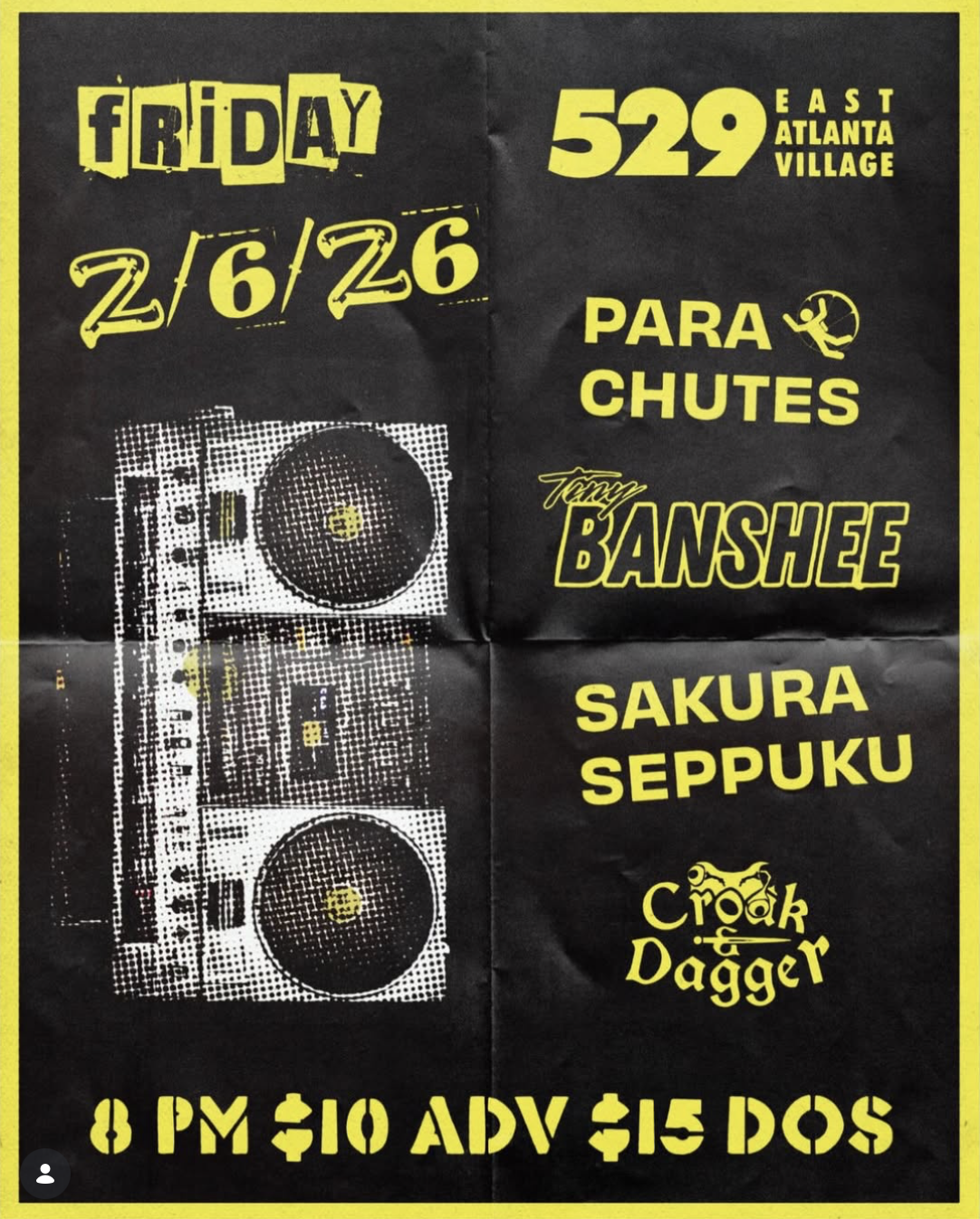
Catch Parachutes live at 529 on February 6th with Tiny Banshee, Sakura Seppuku, and Croak and Dagger.
Tickets available on: www.bigtickets.com
Follow @frequency.atl for local music news, interviews, and more.
Credits :
Interview: Ellen Arden
Editing: Tyler Brune
© FrequencyATL